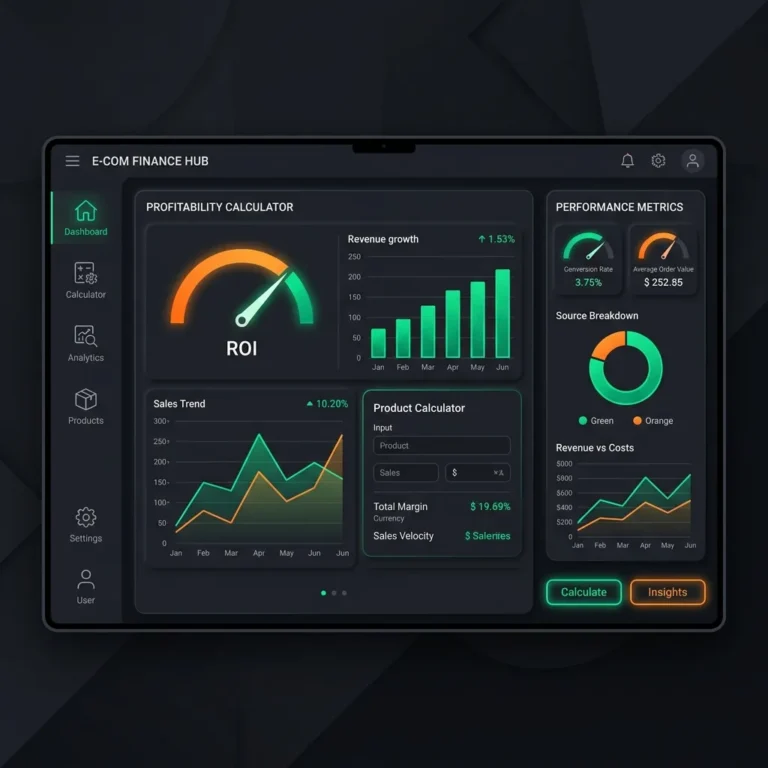

Amazon FBA vs FBM in 2026: Fee Structure, Hidden Costs, & Margin Comparison
Choosing between Fulfilled by Amazon (FBA) and Fulfilled by Merchant (FBM) is one of the most critical margin decisions an e-commerce brand will make. With Amazon’s latest 2026 fee adjustments—including updated fulfillment weight tiers and low-inventory-level fees—relying on static spreadsheets can quickly turn a winning product unprofitable.
📦 Run Your Product Numbers Live:
Test your exact weight, dimensions, and selling price on our interactive Amazon FBA vs FBM Fee & Profit Simulator, or calculate break-even volume with the Break-Even Units Calculator.
1. Understanding the 2026 Amazon Fee Structure
Selling on Amazon involves two distinct expense categories: baseline marketplace access fees (which apply to both FBA and FBM) and fulfillment execution fees (which apply to FBA):
A. Amazon Referral Fees (Universal)
Regardless of fulfillment method, Amazon takes a commission on every transaction based on the product category:
- Standard Merchandise & Home: 15% of gross sales price.
- Consumer Electronics: 8% (benefiting from lower fee caps on higher price points).
- Clothing & Accessories: 17% (reflecting higher reverse-logistics and return rates).
- Grocery & Gourmet Food: 8% on items under $15; 15% on items over $15.
B. FBA Fulfillment (Pick & Pack) Fees
For FBA orders, Amazon handles warehouse storage, order packing, two-day Prime delivery, customer service, and returns. Fulfillment fees are calculated strictly on packaged unit weight and dimensional boundaries:
| Weight Bracket (Standard Size) | 2026 FBA Fulfillment Fee | Typical Compatible Product Examples |
|---|---|---|
| Small Standard (≤ 4 oz) | $3.22 | Phone cases, charging cables, jewelry. |
| Large Standard (8 to 12 oz) | $3.59 | Water bottles, cosmetic jars, paperback books. |
| Large Standard (12 to 16 oz) | $4.15 | Kitchen scales, board games, apparel items. |
| Standard (1.5 to 2.0 lbs) | $5.40 | Small appliances, weighted blankets, tool kits. |
2. The Core Strategic Comparison: When FBA Wins vs When FBM Wins
When to Choose FBA:
- High-Velocity, Lightweight Items: Products weighing under 1.5 lbs enjoy subsidized delivery pricing that independent 3PL warehouses cannot match for residential addresses.
- The Prime Buy Box Advantage: Prime-badged listings convert at a 25% to 35% higher rate than merchant-fulfilled offers competing at identical price points.
- Hands-Off Operations: Eliminates the need for 7-day weekend packing operations and dedicated support staff to handle carrier tracking disputes.
When to Choose FBM:
- Oversized, Bulky, or Heavy Goods: Items exceeding 5 lbs face steep Amazon dimensional weight surcharges; private freight forwarders or regional ground carriers are often 30% cheaper.
- Customized or Made-to-Order Products: Personalized engraving, bespoke packaging, or products requiring individualized pre-shipment assembly.
- Slow-Moving Luxury or Specialized Inventory: Avoids punitive long-term storage fees ($7.20/cu.ft for inventory aged over 180 days) and low-inventory-level penalties.
3. Four Hidden Costs Amazon Sellers Overlook
- Inbound Placement Service Fees: Introduced in 2024 and refined in 2026, Amazon charges an extra $0.21 to $0.35 per unit when sellers ship inventory to a single fulfillment center rather than splitting shipments across 4 to 5 regional hubs.
- Q4 Seasonal Storage Surge: Monthly storage rates triple from $0.87/cu.ft (Jan–Sep) to $2.40/cu.ft (Oct–Dec). Over-ordering Q4 stock that lingers into January can wipe out holiday profits.
- Customer Return Processing Fees: In apparel and footwear, Amazon charges sellers a dedicated return processing fee for every returned unit to cover inspection and repackaging.
- Advertising Cannibalization: Sponsored Product ads on Amazon frequently account for 10% to 20% of retail price. Always factor target ACOS (Advertising Cost of Sales) into your unit economics model.
Frequently Asked Questions (FAQ)
Can I sell the same product as both FBA and FBM simultaneously?
Yes. Advanced sellers routinely maintain an active FBM SKU alongside their primary FBA listing. If FBA inventory stocks out unexpectedly, the FBM listing automatically inherits the Buy Box, preserving sales rank while replenishment stock is in transit.
What is a good target net margin for Amazon FBA?
A healthy e-commerce net margin on Amazon FBA is between 18% and 28% after absorbing COGS, referral fees, fulfillment, inbound freight, and PPC advertising. Anything below 15% leaves insufficient buffer for returns and storage surges.
Where can I calculate my product’s Amazon margin today?
Use Toolfix’s free Amazon FBA vs FBM Fee & Profit Margin Simulator to model 2026 referral fees, size-tiered pick-and-pack rates, and compare monthly profit outcomes.